
What the Numbers Told Us When America Went Back to Work
As the country prepared to return to work during the early stages of COVID-19, the U.S. Department of Labor released guidance under the Families First Coronavirus Response Act (FFCRA) to help workers and small businesses understand new protections and benefits.
My team supported that effort by creating posters, billboards, radio PSAs, and motion graphic explainers within an aggressive timeline.
A public relations firm led an extensive digital awareness campaign to make sure the information reached the people who needed it most.
The data from that campaign helped confirm where our investments paid off—and where they didn’t. And helped us decide where to scale, hold, or reduce.
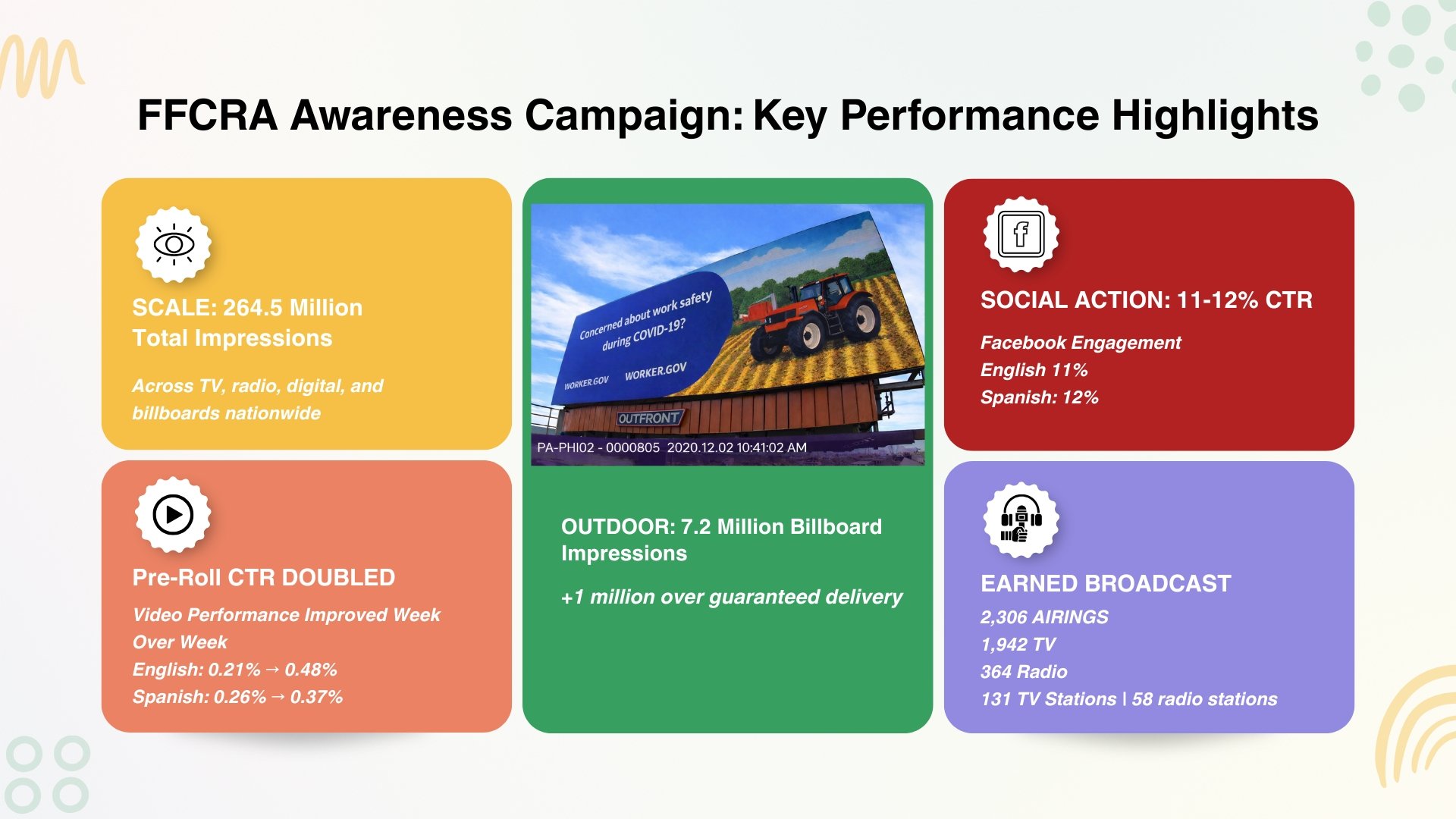
The above graphic pulls from a specific week worth of data in Dec, 2020.
If we were adjusting spend week-to-week, the playbook would be:
Scale / Protect
Facebook (English + Spanish, especially Spanish)
Pre-roll video (especially Spanish)
TV & Radio PSA distribution
Hold Steady
Billboards (already overdelivering)
Core TV/Radio mix (don’t interrupt growth)
Reduce First if Needed
Display banners
English Instagram
The data below were more comprehensive reports during that time.
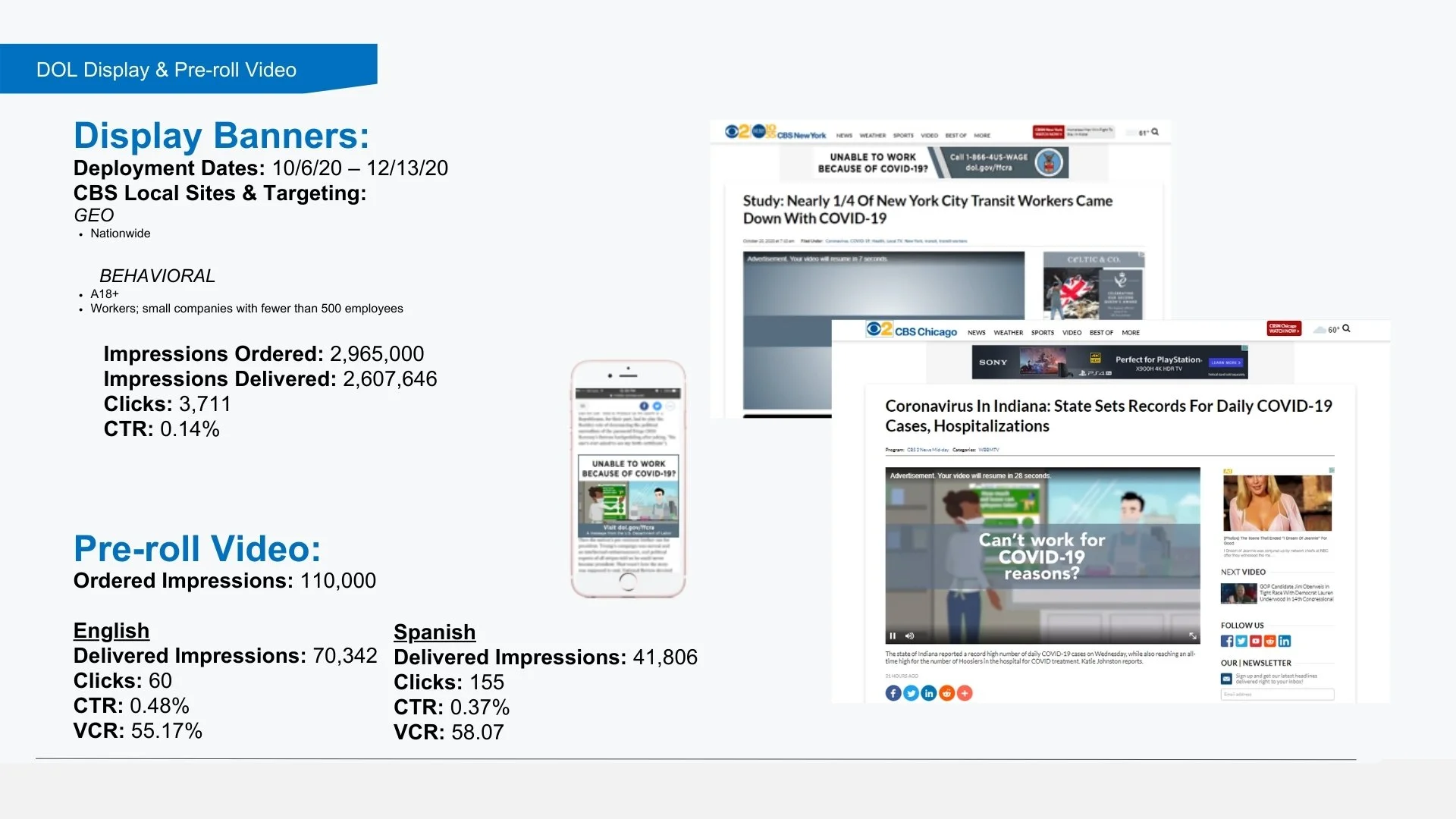
Display banners on CBS local sites delivered broad national reach, serving more than 2.6 million impressions nationwide. With a click-through rate of 0.14%, the banners performed as expected for large-scale programmatic display. Their real value wasn’t driving clicks, but reinforcing awareness and credibility across a wide audience of workers and small businesses.
Video told a more compelling story. Pre-roll ads achieved video completion rates above 55% in both English and Spanish, signaling that viewers were willing to stay with the message. Spanish-language video slightly outperformed English on completion rate, a strong indicator that the content was resonating deeply with that audience.
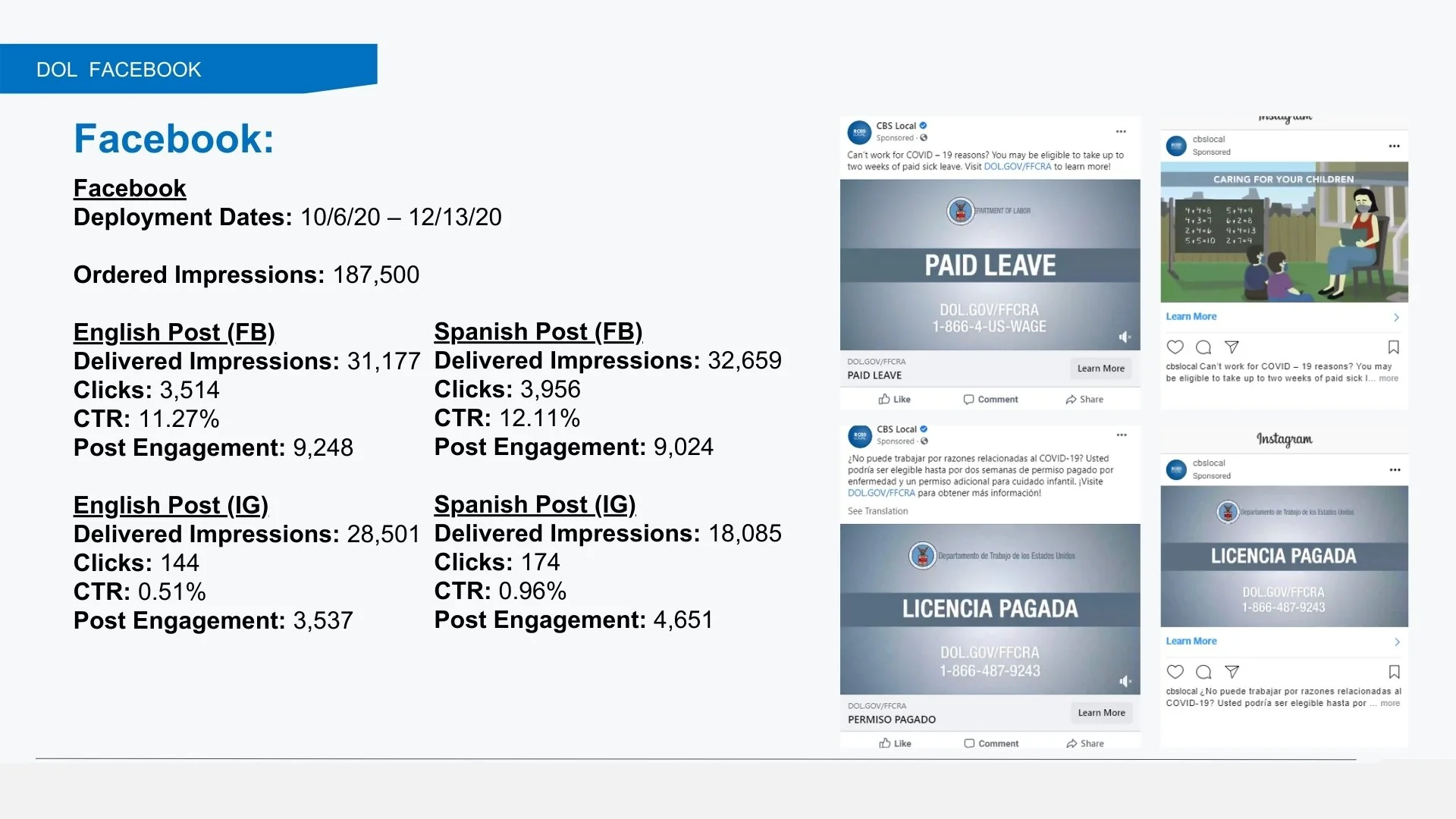
Social media—especially Facebook—stood out.
English and Spanish Facebook posts generated click-through rates above 11%, an exceptionally high result for government messaging. Engagement numbers reinforced the same conclusion: when workers encountered this information in a familiar, shareable format, they didn’t just see it—they acted on it.
In the end, during the uncertainty of the 2020 COVID pandemic, paying close attention to data wasn’t optional, it was a duty. For the FFCRA effort, performance data guided real-time pivots in creative strategy, so limited resources reached the people who needed information most. Treating data as a public service ensured our work stayed focused, responsive, and accountable, helping critical protections reach as many workers as possible when clarity mattered most.